
Employee Relations Case Management Software That's Defensible and Consistent
Document, investigate, and resolve complaints, disciplinary actions, and grievances in one employee relations case management platform.
Maintain a clear audit trail, consistent documentation, and policy alignment to defend workplace decisions if they are challenged.


Inconsistent Case Handling is a Compliance Risk
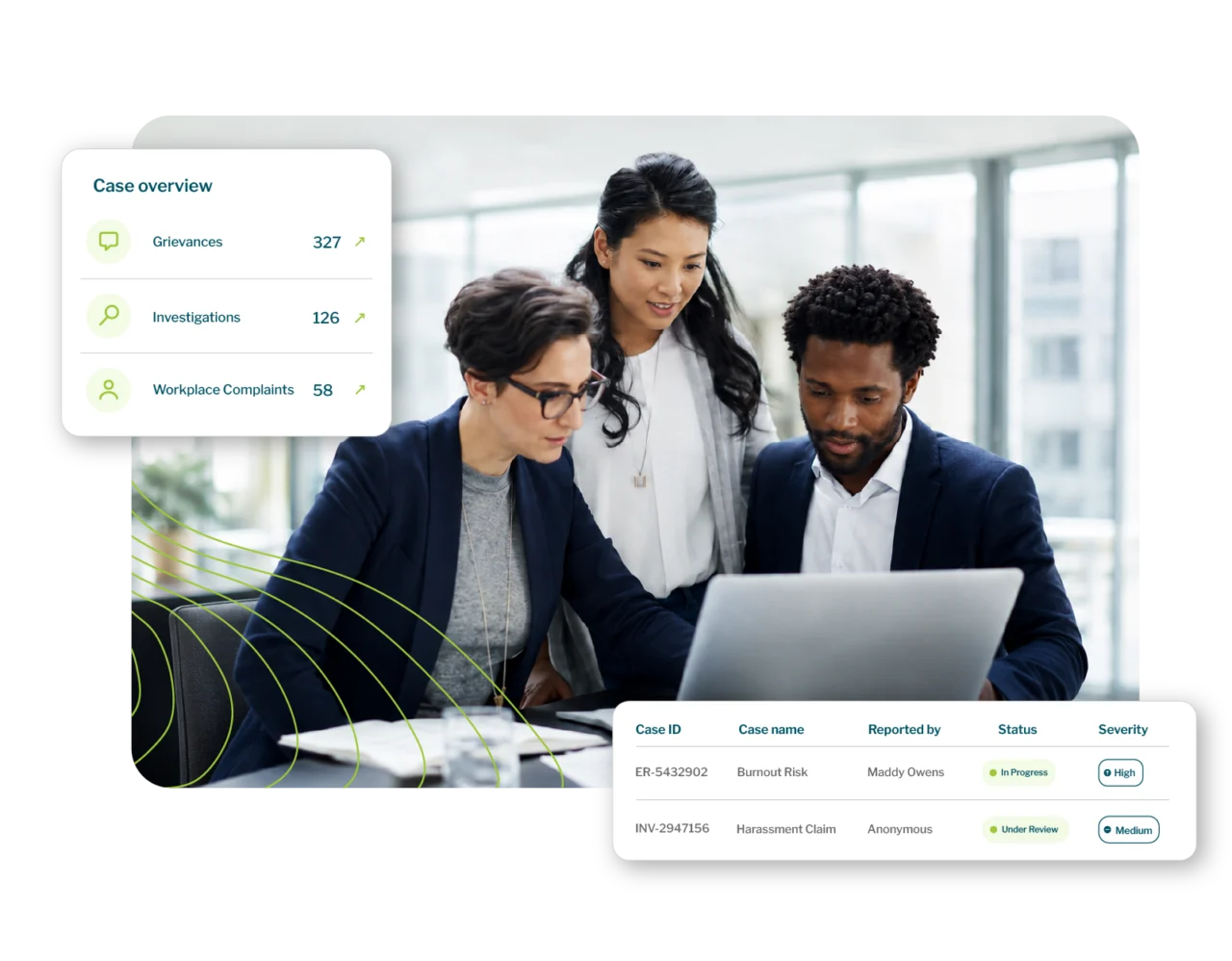
An employee complaint initiates an investigation. An investigation can lead to a disciplinary action.
HR has to review what happened before to determine the next step. Yet most organizations manage these activities in disconnected systems. They rely on SAP, Workday, Dayforce, or Oracle as their system of record.
However, these HCMs do not excel at tracking workplace issues in one case history.
When that history isn’t visible, disciplines or complaints like harassment, bullying, misconduct or discrimination are handled differently. Therefore, inconsistent decisions are hard to defend when challenged, leading to compliance risk.
Our employee relations case management software keeps every investigation, document, and audit trail in a centralized system, aligned to policy.
Make Better Employee Relations Decisions with Powerful Case Management Capabilities
Protect sensitive employee information with role-based security, audit trails, and controlled access to confidential records.
Extend SAP, Workday, Dayforce, Oracle, and UKG while keeping employee relations data synchronized with your existing HCM or HRIS system.
Maintain a complete employee history for complaints, investigations, disciplinary actions, and resolutions.
Use a shared source of truth for all employee-related decisions and investigations.
Reduce manual administration through AI-powered case intake, intelligent routing, automated notifications, and configurable workflows.
Support global workforces in 50+ languages for highly regulated and distributed organizations.
Identify patterns before issues escalate with real-time insights on recurring behaviors, workforce trends, and emerging employee relations risks.
A Structured Case Management Process for Every Investigation
Employee relations decisions carry litigation costs.
Inconsistently handled complaints, investigations or disciplines lack the documentation to explain what happened and why.
The result is legal exposure that could have been avoided.
Sodales’ employee relations case management software guides cases through the same intake, documentation, and resolution steps to keep case handling consistent and defensible.
Every Complaint, Every Document, One Case
Every conversation, document, decision, and outcome is connected to a single case record with role-based access.
AI-Guided Intake
Employees describe what happened in their own words. The system identifies the people involved, pulls the details, and builds the case automatically.
Audit-Ready Documentation
Case notes, findings, and corrective actions are tracked and documented for audits or legal reviews.
Same Process, Every Case
Configurable workflows require the same steps and approvals on every case.
Identify Emerging Employee Relations Risks Earlier
An employee files a harassment complaint against a colleague.
On its own, the issue appears to be isolated. But when HR reviews the employee’s history, they find previous complaints, an investigation, and a prior corrective action involving the same individual.
What appears as a single incident is actually part of a broader pattern.
The full picture helps investigators understand context, make informed decisions, and intervene before workplace issues escalate.
Spot repeat concerns and emerging patterns before they become larger workplace disruptions or compliance risks.
Respond faster and more consistently using AI agents that recommend next steps, predict escalation risks, and identify relevant policies, grievances, and CBA clauses.
Sodales’ preventative risk model (leading and lagging indicators) help HR move from reactive case management to proactive risk management.
Provide executives with real-time visibility through dashboards, reporting, and workforce risk indicators that support informed decision-making.
A Complete Employee Relations Timeline
An employee is recommended for termination following a workplace incident.
HR reviews the employee’s timeline and finds that the situation is more complex than they considered. The employee has a history of positive performance, no prior disciplinary actions, and previous complaints that resulted in conflict-resolution measures. What was initially grounds for termination now requires a different response.
When the full timeline is available in one place, HR can evaluate issues within the context of previous events, actions, and outcomes.
View complaints, investigations, disciplinary actions, and resolutions in a centralized employee relations case management platform.
Maintain a complete history of the employee’s lifecycle as issues evolve with time.
Connect related cases and activities to overcome blind spots created by fragmented records.
Integrate with the Systems You Already Use
Sodales does not replace your HR core system of record.
Instead, it extends it using bi-directional APIs that sync to your employee records in real-time. We are proud partners of SAP, Dayforce, and Workday while integrating with Oracle, UKG, and many other enterprise systems. Your HCM or HRIS manages your employee records while we manage the employee relations processes it cannot.
See how our employee relations case management software can support your workplace issues.

Synchronize employee data in real-time with SAP, Workday, Dayforce, Oracle, UKG and other systems

Eliminate duplicate data entry by maintaining a single source of truth for employee information

Improve consistency with connected employee relations processes that extend your HCM or HRIS

Reduce dependence on spreadsheets and disconnected tools used to manage complaints, investigations, disciplines, and grievances
Speed up your reporting and visibility with connected employee relations and workforce data
Have a defensible case record with consistent documentation, policy alignment, and a clear audit trail from intake to resolution
One Employee. One File. Multiple Connected Processes


FAQs
What is employee relations case management software?
Employee relations case management software is used to document workplace issues, track case changes, and preserve a complete record of employee interactions over time.
It provides a centralized system for managing sensitive employee issues with visibility into how previous events, actions, and outcomes affect future decisions.
An advanced employee relations system connects information from spreadsheets, emails, and multiple systems into one platform. This allows organizations to make policy-aligned decisions, identify recurring risks and patterns, and respond proactively to workplace issues rather than reacting per case.
What types of employee relations cases can be managed?
Common case types include employee complaints, misconduct allegations, policy violations, disciplinary matters, grievances, and other sensitive workplace issues.
Employee relations platforms connect related events, maintain case continuity for different teams, and ensure workplace decisions are always informed by the broader context surrounding an issue.
How does employee relations software improve investigations?
Employee relations software accelerates investigations through standardized processes, centralized documentation, and well-defined workflows, which assist HR and other teams.
Investigators can track activities, compile evidence, document findings, and maintain a complete record of actions taken throughout the investigation.
This leads to consistent decisions, less administrative burden, and repeatable processes for future incidents.
What is the difference between employee relations case management software and HR case management software?
HR case management software is typically used to manage a broad range of HR requests, inquiries, and services cases, including benefits questions, payroll issues, policy requests, and employee support tickets.
Employee relations case management software is specifically designed to manage sensitive workplace issues and provide visibility into how employee issues evolve as the case progresses.
Despite some overlap, employee relations gives more importance to investigations, workplace incidents, risk prevention, and consistent decision-making.
Organizations typically use employee relations software that integrates with their HCM as well as broader HR case management tools
How can organizations track employee complaints, investigations, and disciplinary actions in one system?
They can use a centralized employee relations platform instead of relying on spreadsheets, email, and disconnected systems.
When everything is maintained in a single record, HR makes fewer mistakes since less time is spent on searching for information and cases remain connected to broader employee context.
Sodales platform is based on the concept of One Employee, One File.
Why is employee history important in employee relations?
Employee history shows organizations how workforce events and outcomes are connected and reduces risk of legal action against them, preventing them from implementing wrong decisions.
For example, an employee’s complaint against a colleague may be viewed differently if they already have prior complaints against them.
However, a clean record also provides important context to determine an appropriate response.
The same is true for disciplinary actions. When an organization can link behaviors of misconduct to previous allegations, there is less chance of errors.
An employee who is punished for a wrong decision may sue the organization. Having an employee’s history in one platform creates a paper trail and protects against liability.
Why is employee history important in employee relations?
With the One Employee One File capability in Sodales, you can visualize all the cases that an employee has across complaints, disciplinary actions, investigations, etc.
How can organizations ensure disciplinary actions are applied consistently?
They can start by standardizing how disciplinary issues are documented, reviewed, approved, and resolved.
When disciplinary decisions are connected to an employee’s history, supporting documentation, and previous outcomes, it reduces subjectivity and bias.
Consistency thus improves fairness and shows that decisions are based on established processes rather than individual interpretation.
How can organizations track employee disciplinary actions and corrective measures?
They can do so by maintaining them in a centralized employee relations platform rather than spreadsheets, email or displaced records.
Each action is thus documented with supporting information, approvals, outcomes, and follow-up activities, creating a complete record of how an issue was addressed over time.
Our employee relations software helps HR maintain correct documents, monitor corrective actions, and keep information available for future reference.
How do organizations connect policy violations to disciplinary decisions?
By documenting both within the same employee relations process.
When policies, supporting evidence, disciplines, approvals, and outcomes exist together in one platform, HR can see the context and whether it aligns with an organization’s requirements.
The documented record creates transparency and consistency, which is necessary to tie the disciplinary actions back to established policies.
How can AI improve employee relations decisions?
AI can help HR triage issues, identify risks, locate relevant policies, and recommend appropriate next steps.
For example, AI agents can support incident investigations, grievance reviews, disability accommodations, disciplinary actions, and policy interpretation.
They can also predict escalation risks, identify relevant CBA clauses, and help HR respond more consistently to similar situations.
Instead of replacing human judgment, AI reviews information faster, unearths relevant context, and makes more informed employee relations decisions.