
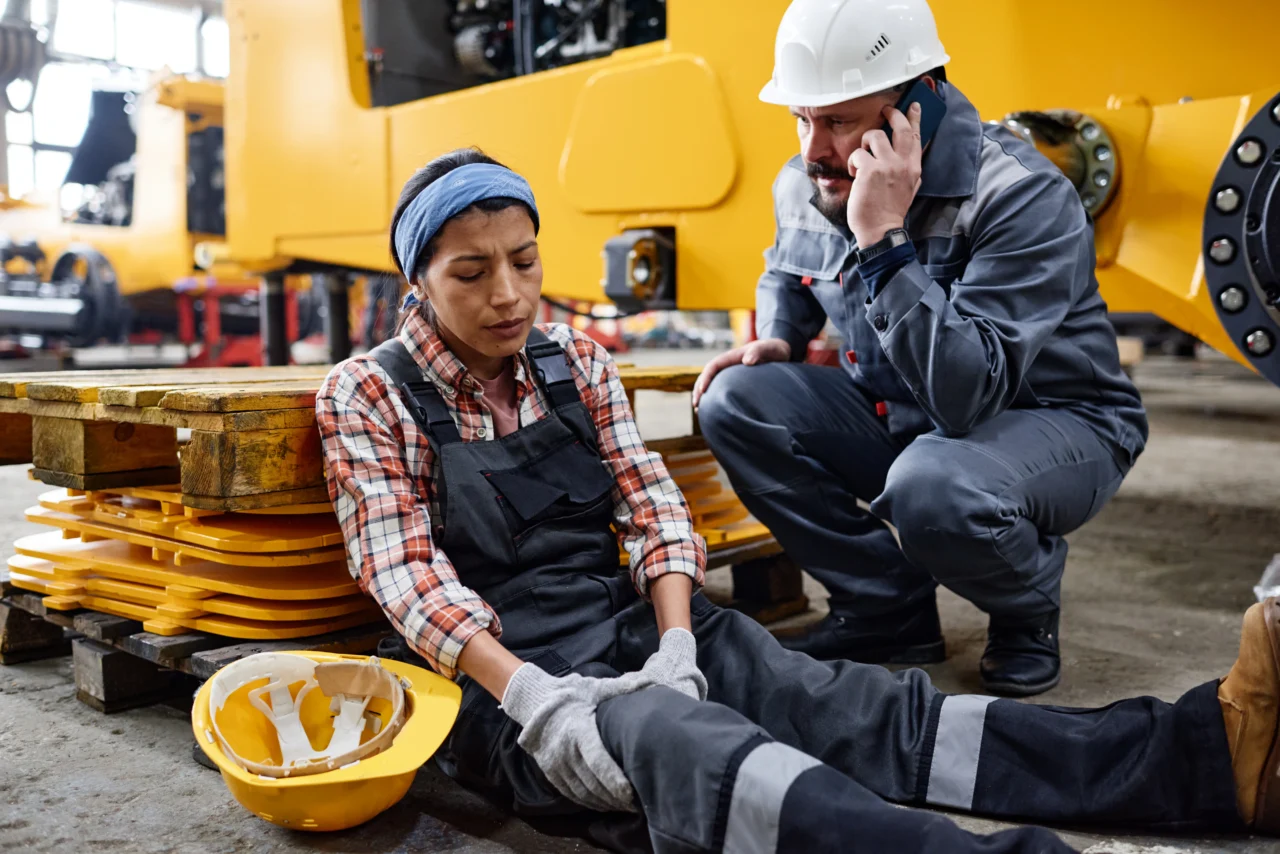
The most common types of workplace injuries include musculoskeletal injuries, slips and falls, struck-by incidents, caught-in or caught-between injuries, repetitive motion injuries, transportation-related incidents, and harmful exposure injuries.
“According to U.S. Bureau of Labor Statistics (BLS) injury and illness data, private industry employers report 2.5 million nonfatal workplace injuries and illnesses annually, illustrating how workplace injuries continue to impact employee productivity, and business operations”
Understanding the root causes of workplace injuries helps enterprise organizations reduce operational risk, improve safety performance, mitigate injury related costs, and strengthen overall workforce compliance.
7 Common Workplace Injuries at a Glance
Type of Injury | Common Causes | Prevention Focus |
Musculoskeletal Injuries | Lifting, pulling, excessive force, awkward postures | Ergonomic controls |
Slips, Trips, and Falls | Spills, clutter, unprotected heights | Inspections and housekeeping |
Struck-By Injuries | Vehicles, equipment, falling objects | Traffic and material controls |
Caught-In / Caught-Between | Machinery and moving equipment | Guarding and energy control |
Repetitive Motion Injuries | Repetition and poor workstation design | Ergonomic task design |
Transportation Injuries | Vehicles, forklifts, mobile equipment | Training and traffic management |
Harmful Exposure Injuries | Chemicals, electricity, extreme environments | Exposure controls and PPE |
Key Takeaways
- Know the seven common injury types: musculoskeletal injuries, slips and falls, struck-by incidents, caught-in or caught-between injuries, repetitive motion injuries, transportation incidents, and harmful exposure injuries.
- Prevent injuries by addressing root causes: effective prevention requires ergonomic controls, housekeeping, equipment safeguards, training, inspections, PPE, and corrective actions that target systemic issues.
- Use near misses as early warning signals: recurring hazards, employee reports, minor discomfort, equipment issues, and unsafe conditions can reveal risk patterns before serious injuries occur.
- Connect safety data in one system of record: regulated enterprises need integrated visibility across incidents, investigations, root causes, corrective actions, disability management, accommodations, and occupational health.
- Strengthen prevention with Sodales: Sodales helps organizations move from reactive incident reporting to proactive injury prevention through connected workflows, structured RCA, action tracking, and AI-assisted risk insights.
How to Prevent Workplace Injuries
Managing workplace safety requires looking beyond immediate safety incidents to identify and address the underlying causes of workplace injuries.
Below are the top 7 types of workplace injuries, including their root causes, warning signs, prevention strategies, and corrective actions that help organizations reduce future incidents.
Musculoskeletal Injuries (Overexertion & Muscle Strains)
Musculoskeletal injuries are among the most common types of workplace injuries and are frequently caused by lifting, carrying, pushing, pulling, or working in awkward postures.
These injuries affect muscles, tendons, ligaments, and joints and often develop gradually from repetitive strain or occur suddenly during physically demanding tasks. They can lead to lost productivity, extended recovery periods, and increased workers’ compensation costs.
- Primary Causes: Heavy manual lifting, excessive bending and reaching, repetitive forceful movements, fatigue, and overexertion.
- Prevention Focus: Ergonomic controls, mechanical lifting equipment, workload management, and employee training.
- Root Cause Analysis (RCA) Breakdown: Look beyond “improper lifting technique.” Investigate missing lift-assist devices, poor workstation design, excessive overtime, inadequate staffing, or unrealistic production targets.
- Near-Miss Warning Signs: Frequent reports of minor soreness, employees modifying tools themselves, heavy loads being lifted without assistance, and increasing ergonomic complaints.
- Corrective Actions: Install mechanical hoists and lift assists, update Job Safety Analyses (JSAs), conduct ergonomic assessments, and implement task rotation programs.
When an injury occurs, EHS incident reporting software and a Disability and return-to-work management software can help connect incident reporting, workplace accommodations, return-to-work processes, and corrective action tracking within a single record.
Slips, Trips, and Falls
Slips, trips, and falls remain one of the leading causes of workplace injuries across every industry.
These incidents can occur on the same level or from elevated surfaces and often result in sprains, fractures, head injuries, and lost-time incidents.
Many are preventable through effective housekeeping, routine inspections, prompt hazard correction, and coordinated occupational health and safety (OHS) programs that help organizations identify, investigate, and address risks before injuries occur.
- Primary Causes: Wet floors and spills, floor clutter, loose cables, uneven walking surfaces, and unprotected heights.
- Prevention Focus: Housekeeping programs, routine inspections, facility maintenance, fall protection systems, and OHS monitoring processes that help identify hazards before they lead to incidents.
- RCA Breakdown: Conduct an investigation to examine maintenance schedules, delayed cleanup procedures, inadequate lighting, missing handrails, ineffective footwear policies, and any occupational health and safety gaps that may have contributed to the event.
- Near-Miss Warning Signs: Recurring spills, extension cords across walkways, debris accumulation, employee reports of slippery surfaces, and repeated OHS observations involving the same hazards.
- Corrective Actions: Install anti-slip flooring, improve housekeeping inspections, use permanent cord covers, strengthen fall protection controls, and document health and safety follow-up actions to verify that corrective measures remain effective.
Integrating incident investigations with Occupational Health and Safety (OHS) Medical Services helps organizations track and manage injury-related health data.
It also supports employee recovery, identifies recurring risk patterns, and ensures corrective actions contribute to long-term workplace safety improvements.
Struck-By Injuries
Struck-by injuries occur when a worker is hit by a moving object, falling material, vehicle, piece of equipment, or tool.
These incidents are especially common in manufacturing, warehousing, transportation, construction, and logistics environments where people and equipment operate in close proximity.
- Primary Causes: Falling tools and materials, moving equipment, forklift traffic, and unsecured inventory.
- Prevention Focus: Traffic management, physical barriers, safe material storage, and equipment inspections.
- RCA Breakdown: Investigate poor storage practices, missing rack protection, inadequate pedestrian separation, and ineffective loading procedures.
- Near-Miss Warning Signs: Objects falling from shelves, leaking roofs, tools stored near edges, and pedestrians entering equipment zones.
- Corrective Actions: Install rack netting and barriers, separate pedestrian and equipment traffic, improve storage standards, and increase the number of workplace inspections.
Real-time hazard reporting, supported by Proactive Risk Management helps address risks before injuries occur.
Caught-In or Caught-Between Injuries
Caught-in or caught-between injuries occur when a worker becomes trapped, crushed, compressed, or entangled in machinery, equipment, or moving objects.
These incidents are often severe and can result in amputations, fractures, permanent disabilities, or fatalities if proper safeguards are not in place.
- Primary Causes: Unguarded machinery, rotating shafts, pinch points, and bypassed safety devices.
- Prevention Focus: Machine guarding, Lockout/Tagout (LOTO), equipment maintenance, and safe work procedures.
- RCA Breakdown: Identify missing guards, incomplete LOTO procedures, inadequate training, or production pressure leading employees to bypass safeguards.
- Near-Miss Warning Signs: Reaching into active equipment, disabled safety interlocks, and frequent equipment jams.
- Corrective Actions: Upgrade machine safety systems, improve operator training, and strengthen inspection programs. Conduct Lockout/Tagout (LOTO) audits to verify that hazardous energy sources are properly isolated before maintenance, cleaning, or servicing activities begin.
Preventing these incidents requires both engineering controls and a strong safety culture that reinforces compliance with lockout and machine-guarding procedures.
Repetitive Motion Injuries (RSI)
Repetitive motion injuries, also known as repetitive strain injuries (RSIs), develop over time due to repeated movements, sustained awkward postures, or continuous pressure on muscles and joints.
Although they may not appear as serious as traumatic injuries, they can significantly affect employee productivity, attendance, and long-term health, increasing costs.
- Primary Causes: Repetitive tasks, poor workstation design, static postures, and high-frequency assembly work.
- Prevention Focus: Ergonomic task design, job rotation, micro-breaks, and adjustable workstations.
- RCA Breakdown: Review workstation configurations, production speeds, staffing models, and break schedules.
- Near-Miss Warning Signs: Wrist or back discomfort, frequent stretching during shifts, self-applied braces, and recurring ergonomic complaints.
- Corrective Actions: Install adjustable workstations, introduce job rotation programs, implement ergonomic assessments, and review workload distribution.
These corrective actions fall under workplace accommodations. Workplace accommodations are adjustments to a job, work environment, or process that help employees perform their duties safely and effectively.
They can be coordinated more effectively through a reasonable accommodation software for compliance and defensibility.
Transportation & Mobile Equipment Incidents
Transportation-related workplace injuries involve road vehicles, forklifts, powered industrial trucks, and other mobile equipment.
These incidents often result in serious injuries because of the forces involved and can affect not only operators but also nearby pedestrians and contractors.
- Primary Causes: Vehicle collisions, forklift incidents, blind spots, speeding, and operator error.
- Prevention Focus: Driver training, equipment maintenance, traffic management, and pedestrian separation.
- RCA Breakdown: Investigate operator fatigue, poor visibility, missed maintenance, and ineffective traffic plans.
- Near-Miss Warning Signs: Sudden braking incidents, near collisions, damage to facility structures, and repeated traffic violations.
- Corrective Actions: Implement telematics systems, create designated traffic routes, enforce speed controls, and improve visibility and signage.
Enterprise leaders can centralize safety trends and reporting to manage, record and track corrective actions to prevent transportation and mobile equipment incidents.
Harmful Exposure (Chemical, Environmental & Biological)
Harmful-exposure injuries occur when employees encounter hazardous substances, environmental conditions, or biological agents.
Unlike many workplace injuries, the effects of exposure may not be immediately noticeable and can lead to long-term health complications if hazards are not properly controlled.
- Primary Causes: Chemical exposure, hazardous fumes, electrical contact, biological hazards, and extreme temperatures.
- Prevention Focus: Engineering controls, ventilation systems, Personal Protective Equipment (PPE) compliance, and SDS accessibility.
- RCA Breakdown: Review ventilation effectiveness, chemical storage procedures, SDS management, and PPE programs.
- Near-Miss Warning Signs: Strong chemical odors, minor skin irritation, headache complaints, and improper chemical storage.
- Corrective Actions: Upgrade ventilation systems, improve hazard communication, strengthen PPE compliance, and conduct exposure monitoring.
Environmental incidents, investigations, chemical releases, and regulatory obligations can be managed through environmental safety.
Why Regulated Enterprises Need a Unified System of Record for Workplace Injury Prevention
Regulated enterprises need a unified system to:
- Connect incidents, investigations, root causes, near misses, corrective actions, and disability management activities in a single system.
- Gain visibility into injury trends, compliance obligations, risk assessments, workplace health activities, accommodations, and corrective actions.
- Eliminate data silos caused by emails, spreadsheets, and disconnected systems that limit safety oversight.
- Identify recurring hazards and ensure corrective actions are completed to prevent repeat incidents.
- Leverage AI-powered Incident Triage to prioritize cases based on severity,
risk, and business impact.
- Use AI driven Incident Investigation Recommendations to accelerate root cause analysis and support more consistent investigations.
- Enable AI enabled Incident Predictive Risk Analysis to identify emerging risks and highlight areas requiring preventive action.
- Apply AI assisted Disability Triage to streamline case management and direct resources where they are needed most.
- Utilize AI supported Disability Accommodation Recommendations to support accommodation decisions and improve employee outcomes.
- Move from reactive incident reporting to proactive risk prevention, helping reduce workplace injuries and strengthen safety performance.
How Sodales Helps Prevent Workplace Injuries Through Incident Management and RCA
Understanding the top 7 types of workplace injuries is only the beginning. The most effective safety programs focus on identifying hazards early, investigating root causes, and ensuring corrective actions are completed.
The Sodales Health, Safety, Employee Relations & Labor Relations Platform helps regulated organizations:
- Connect incidents, hazards, inspections, and corrective actions in real time.
- Conduct Root Cause Analysis (RCA) within structured investigation workflows.
- Track corrective actions through automated completion of workflows.
- Manage occupational health and return-to-work processes seamlessly.
- Analyze safety trends across global locations and operational departments.
- Improve compliance through centralized reporting and standardized documentation.
Rather than treating workplace injuries as isolated events, Sodales helps organizations identify patterns, address underlying hazards, and create a proactive safety culture focused on long-term prevention.Ready to prevent workplace injuries with Sodales?


